WALK IN BALANCE | ALEXANDER TECHNIQUE CENTER
  • Home
    • About The Technique
    • Scientific Research
    • Stress & Chronic Pain
    • F.A.Q.
  • Online Programs
  • Testimonials
  • Blog
  • Contact
  • About

How You Use Yourself Matters. But What Does This Mean For Your Life?

8/17/2025

 
Picture

Self-use is an interesting concept. Let me explain.

Imagine you're carrying a backpack full of groceries. If you sling it over one shoulder, let the straps dig into your skin or carry it unevenly, it quickly becomes uncomfortable and heavy. But if you adjust the straps properly, distribute the weight evenly and walk with awareness, the backpack feels lighter and moving becomes more easy.

You of course know, without being told, that how you carry your backpack changes how you perceive it.

But think for a moment of your body as a sort of backpack. “Use” is a word we often use in the Alexander Technique, and it means how you carry and move yourself in everyday life.

And how you use yourself matters greatly.

The word "Use" is not about how you look or whether you are strong or flexible, but how you do things with your body, how you sit, stand, walk, or use your breath.

Even how you think is an aspect of your "Use".


Most of us never really stop to consider how we're using ourselves.
Instead we focus on the objects around us: the chair, the desk, the phone.


But how we carry our body through space, how we respond to gravity and to the objects we encounter, how we hold our head, how we breathe and what we pay attention to: all of these aspects of BEING are part of our Use.

This is such a rich field of exploration; a fascinating and empowering study of YOURSELF because taking charge of how you are BEING TODAY affects everything about your body's future health and wellbeing, 

Take typing on a computer for example. You might rest your wrists on the desk, pull your head forward into the screen and hold your breath.... often habitually and without even noticing.


But over time your neck starts to tighten, your shoulders rise up and your wrists feel stiff. The task (sitting and typing) is simple, but your "Use" is creating tension.

The same task done with different Use can feel effortless. Your body is beautifully adaptable; it's a living, moving system that responds to how you use it. If you use it with habits of tightness, tension, or compression, it will feel heavy and uncomfortable.

But if you use it with awareness, balance and ease, it will feel light and alive.


The great news is that Use can easily be changed. You can learn to stop pulling yourself into patterns that create tension, imbalances and compression, and instead learn to move and express yourself with more freedom and less effort.

This is what I teach in my private, 1:1 coaching programs. This is the essence of the Alexander Technique: To help you become consciously aware of how you use yourself in everyday life so you can choose different ways: with  less effort less and more freedom.

In short, "Use" underlies everything you do. It's the missing piece that connects your structure with your movement and your feelings. When you understand and improve your Use, pain and tension release away and life becomes a little easier. 

You then truly transform how you feel in your body.


Check out my posts on Instagram to learn more about the way I think and teach. Click here if you would like to speak with me to find out how I can help you improve your Use so you can let go of strain and tension and feel great in your body.

Why Popular Attempts To Fix Your Posture Don’t Work (And What To Do Instead)

3/6/2025

 
Picture

Have you ever spent countless of hours at a doctor’s therapy office or the gym repeating exercises aimed at relaxing or strengthening your aching muscles and joints, hoping it would get you out of pain and fix your posture?

But nothing made a lasting positive impact on your well-being...

Does it feel crazy that your body seems to always revert back to your old patterns of slouching, stiffening and tensing up? You correct yourself for a while, but soon enough, you’re right back where you started.

Consider this:

1. Posture cannot be improved by exercising ‘weak’ or relaxing “tense” muscles because there is a reason why they act the way they do. That reason are your whole-body, dysfunctional movement patterns.

​2. Posture cannot be ‘fixed’ by forcing your body into a certain position and then holding it there, because it's unnatural and creates more tension and stiffness.

How posture works

Your posture works through a holistic set of processes that are happening in your sensory and nervous systems, and that are directly influenced by the way you move and think.

Imbalances in your musculoskeletal system are the result of the unconscious messages your muscles receive from your brain that cause dysfunction in how your body operates.

So the real million dollar question is this: How can you use your mind and thinking to develop movement patterns that promote a superb functioning for your body as a whole?

How can you develop a use of your musculoskeletal system that makes you feel balanced and empowered? How can you work more skillfully with your awareness so that your body is adaptive and free to do what you really want it to do, and not held back by dis-ease and limitations?

If you want to improve the way you move, look and feel (your posture!), pay attention to how you guide and direct your body into activity. Think of your body as one unified whole, not a bunch of isolated muscles that you somehow need to manipulate.

Muscular dysfunction must be addressed on the level of consciousness and thought because muscles are merely the 'actors' and 'responders' to the way you think - they're not the 'directors' who holds the whole vision.

It is never too early or too late to learn how to let your posture support you effortlessly for life!

All you need is a simple learning process that helps you to recognize & address the repetitive and dysfunctional patterns that shape how you move, stand, and sit every day so that they not only become functional but promote balance, lightness and ease for your body.

This is the foundation of the Alexander Technique—an educational discipline and body of work that helps your posture to become something you experience, map, guide and enjoy, not something you force.

If you want to learn more about holistic posture improvement go to walkinbalance.net or click here to set up a complimentary New Posture Consultation call and learn how I can help you improve your posture, now and forever.

How Holistic Posture Training Helps You

10/21/2024

 
Picture

​Holistic posture training starts with an important and crucial mindset shift:
Posture cannot be "exercised" into shape—it can only be minded.


This means that strengthening your core or back muscles won’t solve the issue of slouching or relieve persistent neck and shoulder tension. Instead, there are deeper, more concrete patterns at play that need to be understood and addressed.

These patterns are habits ingrained in how you move and coordinate your body, and my role is to guide you toward experiencing these underlying habits firsthand. The real source of your discomfort isn't a weak muscle group but rather an unhelpful coordination pattern.

Slouching, for example, isn’t a sign of failure or weakness. It’s simply an expression of the way your body has learned to move over time.
By understanding and becoming aware of these patterns, you open the door to meaningful change. Let’s start by observing how you coordinate yourself in everyday movements.

This could be as simple as how you walk, stand, sit, or even type at your computer. These patterns don’t change based on the activity; they remain consistent because they’re habitual and repetitive for all of us. The good news is that if we can examine how you hold yourself in one activity, it can reveal a lot about how you approach all other activities.

Once you begin to recognize your typical patterns ("slouching" for example) you can use that awareness to discover new, less stressful ways to move. I will guide you through this process, helping you explore and practice alternative movements that are easier on your body. This isn’t about forcing yourself into a "correct" posture but about understanding how you can naturally move in a way that feels better and works for your body.

Ultimately, the goal is to help you return to the driver's seat of your own body, where you have the freedom to choose how you want to show up in your everyday life. This is the beginning of holistic posture training—a learning process that empowers you to find ease, comfort, and control over your body.

If you’re ready to start sorting out your posture and feel better in your own skin, I’m here to help. For more about this topic download my FREE E-BOOK POSTURE AWARENESS GUIDE, or book a complementary call with me here to find out how I can help you to unravel the patterns that keep you stuck so you can find a new way forward.

Virginia Woolf and the Standing Desk

6/2/2016

3 Comments

 
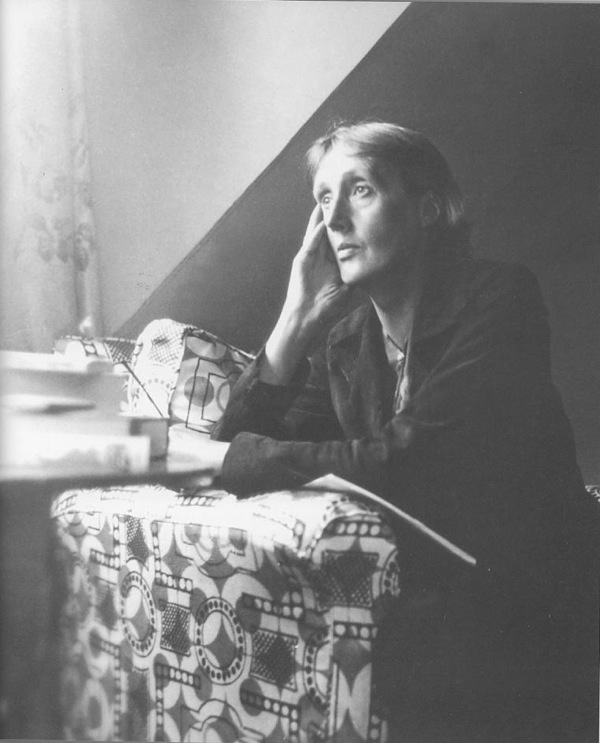
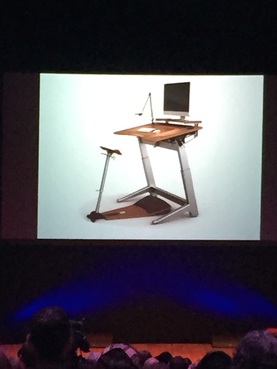
It is said that Virginia Woolf wrote while standing at a desk 3'6" tall because she wanted to be like a painter who could instantly step away from her canvas to get a better view... 
​

She was onto something.  Coming up and out of the mental thicket for air, with wide eyes and ears to inhale space and sound, refreshing the senses to allow the emergence of the grander picture...

Beautiful and relatable. Protagonist for the standing desk.
Picture
Picture
3 Comments
    Picture

    Walk In Balance Center Blog 

    How To Thrive Without Tension & Feel Great In Your Body In The Digital Age.
    ​
    ​Meet Daily Stressors and Life's Challenges with a Spacious Body & Conscious Mind.

    Archives

    September 2025
    August 2025
    July 2025
    June 2025
    March 2025
    December 2024
    November 2024
    October 2024
    September 2024
    August 2024
    January 2020
    October 2018
    August 2016
    June 2016
    May 2016
    March 2016
    November 2015
    October 2015
    September 2015
    August 2015
    June 2015
    May 2015
    March 2015
    February 2015

    Categories

    All
    Adjusting Your Posture At Your Desk
    Alexander Technique
    Alignment
    A-o-joint
    Attention
    Awareness
    Back Oain At Computer
    Backpack
    Balance
    Being
    Blue LIght
    Body Design
    Body Mapping
    Body Wellbeing
    Change
    Collapse
    Computer Health
    Conscious
    Daily Tension
    Devices And Posture
    Disconnection From Body
    Disconnection From Self
    Dynamic Ease
    Ease
    Embodied Posture
    Emotion
    Emotional Weight
    Exercise
    Exercise And Posture
    Eye Strain
    Fear
    Fine-tuned Postural System
    Gadgets
    Gadgets And Posture Issues
    Gravity
    Guided Awareness
    Habits
    Holistic Posture
    How I Sit
    Learning The Alexander Technique
    Live With Less Tension
    Mental And Emotional Collapse
    Modern Furniture And Posture
    Move With Flow
    Muscles
    Muscular Tension
    Neck Tension
    Nodding Joint
    Physical
    Poise
    Posture
    Posture Consultation
    Posture No Quick Fix
    Posture Trouble
    Relationship With Body
    Root Cause
    Self Awareness
    Self-Awareness
    Self-Trust
    Shoulder Pain
    Sitting At Computer
    Slouching
    Small Moments Of Awareness
    Stand And Move
    Stress
    Support
    Tension
    The Use Of The Self
    Too Much Sitting
    Top Joint
    Unease
    Upright Balance
    Upright Body
    Use Of Self
    Well-Being
    Yoga
    Yoga Injury
    Your Body As Ally
    Zeitgeist

Picture

Berlin
Tel: +49 (0)160-3728007

ARE YOU IN BERLIN?
​WORK WITH ME IN-PERSON!

 ​San francisco 
work with me virtually
​FROM ANYWHERE!

tel: 415-879-0038​

Mailing Address: 1290 Sutter St.
Suite 210, ​SF, CA 94109
Picture

Tai Chi / Qi Gong Berlin

Alexander Technique

 Study with me online

Testimonials​

Contact

Picture
Check out Walk in Balance - Alexander Technique Center on Yelp

​© Copyright Walk In Balance Alexander Technique Center I 2025 All Rights Reserved.
  • Home
    • About The Technique
    • Scientific Research
    • Stress & Chronic Pain
    • F.A.Q.
  • Online Programs
  • Testimonials
  • Blog
  • Contact
  • About